About
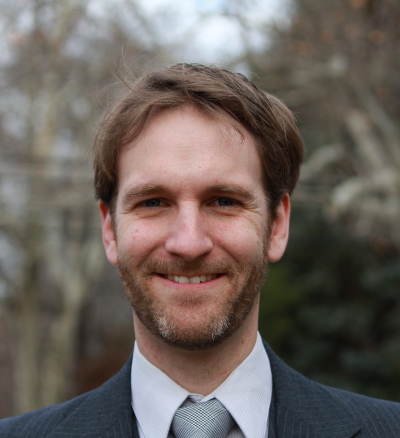
I'm an associate professor in the Department of Philosophy at the University of Pittsburgh. Though I work centrally in the philosophy of language and philosophical logic, I have serious side interests in formal epistemology, ethics, philosophy of mind, and the history of analytic philosophy (especially Wittgenstein).
One of my central interests is in broadly foundational questions in mind and language. In particular: what does it take for thought and language to be about the world around us? Also: what is reasoning, and how does its structure impact standards for good reasoning? For various reasons, my way of engaging with these questions has often led me to theorize about limits: limits to sense; limits to what can be expressed, thought, or reasoned about; limits to what can be known; and how all those limits can be coherently theorized.
Research
Books/Manuscripts
-
Wittgenstein on Rules: Justification, Grammar, and Agreement
Abstract | Publisher2023, Oxford University Press
I provide a new 'bipartite' reading of Wittgenstein's treatment of rule-following and the foundations of semantics in his Philosophical Investigations. On this reading, Wittgenstein's remarks are split between two logically distinct projects marked by different guiding questions, presuppositions, and methodologies. I argue that the attribution of this thoroughgoing bipartite structure resolves a number of internal tensions in the text, and reveals Wittgenstein's controversial remarks on human agreement to exhibit a surprising attentiveness to, and plausible treatment of, a blurring of the semantics/metasemantics distinction arising in Wittgenstein's treatment of foundational semantic questions. The book then turns to an extended engagement with Kripkensteinean meaning skepticism. Although I contend that Wittgenstein never countenanced meaning skepticism, his work in the foundations of semantics gives us the resources to develop an unusual naive reply to the skeptic not yet explored in the post-Kripkean literature. I argue that the Wittgensteinean reply is simple, effective, generalizable, and theoretically 'light-weight,' so that a theorist of almost any stripe could in principle take it up.
-
Inference and the Foundations of Logic
Abstract | Draft (comments welcome!)This book argues for the usefulness of theorizing two subjects together. The first subject is inference, understood as a distinctive contentful mental activity that is subject to standards of good performance. The second subject is logic (or at least, a formal activity that looks a great deal like logic).
One idea of the book is that there are enormously fruitful areas of interaction between these domains. If we think about logic as investigating inference, we open up new understandings of how logical truths could be normative, how they might constrain thought, how logic is relevant to reasoning, and how logical truth is connected to metaphysical necessity. Conversely, logical puzzles teach us quite a bit about inference. In particular, a question about the relation between logic and cognition points us to a key aspect of mentality figuring in a reductive analysis of inference that in turn explains that activity’s most philosophically puzzling features.
A second idea of the book is that thinking of logic as indirectly investigating inferential goodness gives us an illuminating rational reconstruction of core logical tradition. In particular, I argue that if someone (who may have never heard of logic) were to investigate inference for its own sake, they would end up recreating a range of formal frameworks (including classical logic) and tools (including model-theoretic ones) used in logical inquiry, as well as distinctions, concepts, and refinements that mirror many of those found in logical investigations over the past century. What is more, the ties between the formal frameworks and inference would imbue those frameworks with a great deal of the rational and metaphysical significance that has customarily been attributed to logicality. For these reasons, I suggest the inferential conception should stand among the best rational reconstructions of core tradition (even if there may be other such reconstructions) in ways that must constrain what can be said about the nature and significance of logic generally.
A final idea of the book is that this inference-based conception of logic has uncharacteristically broad ties to non-logical domains of inquiry like epistemology, metaphysics, philosophy of language, linguistics, and the philosophy of mind. These ties open up clear and productive (even if challenging) routes for adjudicating logical frameworks, understanding their limits, arbitrating individual logical rules, and settling big picture questions about logic. The book explores several case studies to exhibit how the inferential conception reduces logical questions to distinct, non-logical ones whose arbitration tends not to prejudge the originating logical issues. As such the approach gives us a fresh perspective on existing debates about contested logical rules, the adjustment of logics to accommodate special semantic devices, the nature of logical methodology, and the very foundations of logic itself.
Articles
Marcus on Self-Conscious Knowledge of Belief
Abstract | Preprint | Publisher(2024) Philosophy & Phenomenological Research, Symposium on Eric Marcus's Belief, Inference, and the Self-Conscious Mind
I scrutinize an argument offered by Marcus for the claim that ordinary human beliefs are necessarily known to their subjects. I sharpen a worry raised by Marcus himself that threatens to limit his conclusion to the claim that we have not knowledge but merely a capacity to know our beliefs in virtue of having them. I suggest that in spite of the weakening, this limited conclusion is already quite powerful and, suitably framed, can accomplish much of the work needed of self-conscious knowledge of belief in Marcus's many applications of it.
Wittgensteinean Notions of Uniformity and Kripkensteinean Skepticism
Abstract | Preprint | Publisher(2024) Kripke's Wittgenstein on Rules and Private Language at 40, Claudine Verheggen (ed.), Cambridge University Press
My point of departure in this paper is a reading of Wittgenstein I defend elsewhere on which he never engaged with semantic skepticism in his texts. While this reading distances Wittgenstein from Kripke, an intriguing indirect connection between their work remains. Certain concepts like regularity, constancy, and (qualitative) sameness play a significant role in addressing questions in the foundations of semantics for Wittgenstein. I discuss how, if Wittgenstein's appeal to these notions is legitimate, they may also be of use in difusing (the distinctively metaphysical aspects of) semantic skepticism. Along the way, I contrast the resulting position with its nearest historical antecedent in the work of David Lewis, arguing that Lewis's appeal to metaphysically distinguished properties in the foundations of semantics is not only superfluous, but counterproductive.
De Se Exceptionalism and Frege Puzzles
Abstract | Preprint | Publisher(2020) Ergo, 6(37):1057–1086
De se exceptionalism is the view, notably championed by Perry (1979) and Lewis (1979), that our characteristically 'first-personal' ways of thinking about ourselves present unique challenges to standard views of propositional attitudes like belief. Though the view has won many adherents, it has recently come under a barrage of deserved criticism. A key claim of detractors is that classic examples used to motivate de se exceptionalism from de se ignorance or misidentification are nothing more than familiar Frege-puzzles, which raise no issues exclusive to self-directed thought. After reviewing how this simple objection has substantial force against the classic defenses of exceptionalism, I provide new arguments based on cases of pure de se ignorance that avoid the criticism. Afterward, I revisit Lewis's defense of exceptionalism, diagnosing how he arrived at roughly the right conclusions on the basis of an argument that begged critical questions and obscured the representationally unique features of the de se.
Semantics for Semantics
Abstract | Preprint | Publisher(2017) Reflections on the Liar, Bradley Amour-Garb (ed.), Oxford University Press
This paper investigates the relevance of liar sentences, and semantic circularity more generally, to compositional semantic theorizing. The paper begins by explaining our need for a compositional semantics for semantic vocabulary like "true". It then details a distinctive challenge for compositional theories accommodating semantic circularity. The challenge is to explain, consistently with linguistic productivity facts, relatively stable truth-value judgments concerning two classes of virtuous semantic circularities. I argue that we cannot explain the productive speaker judgements concerning the two classes using a theory that gives "true" an extension assignment as part of its semantic value, owing to a special kind of explanatory circularity. After giving this argument, I explain what shape semantic theories would need to take to avoid the circularity. Intriguingly, the theories in question accommodate a very unusual form of context-sensitivity, unlike that found in (say) ordinary indexical pronouns or gradable adjectives. Theories with precisely this unusual form of sensitivity have been exploited to avoid problems arising from the vicious semantic circularity of the liar. Thus, exploring the conditions for accommodating semantic circularity within a compositional framework privileges a particular kind of approach to the liar paradox, notably advocated by Haim Gaifman.
Magidor on Anomaly and Gaps
Abstract | Preprint | Publisher(2016) Inquiry 59(5):513–28, Symposium on Ofra Magidor's Category Mistakes
This symposium contribution considers two of the more central objections that Magidor (2013) presents against the view that anomalous utterances sometimes express 'partial propositions' that are truth-valueless at some worlds. The first is a Williamsonian logical argument that such propositions entail the possibility of true contradictions. The second is an argument that positing partial propositions is unhelpful in accounting for infelicity judgments connected with anomaly. I contend that the Williamsonian argument, without significant supplementation, begs the question against its target. And I argue that any concerns that partial propositions cannot account for the aberrations of anomaly are based on a misleading conception of how extension-level semantic defect influences felicity judgments. The paper concludes by conceding that Magidor is nonetheless correct in stressing that appeals to partial propositions face noteworthy foundational challenges, as well as empirical challenges in application to anomaly in particular.
De Re Belief and Cumming's Puzzle
Abstract | Preprint | Publisher(2015) Analytic Philosophy 56(1):45–74
Cumming (2008) uses a puzzle about belief ascription to argue against a Millian semantics, and in favor of a semantics on which names are assigned denotations relative to a shiftable variable assignment. I use Cumming's puzzle to showcase the virtues of a rival, broadly Stalnakerian, treatment of attitude ascriptions that safeguards Millianism. I begin by arguing that Cumming's solution seems unable to account for substitutivity data that helps constitute the very puzzle he uses to motivate his account. Once the substitutivity data is acknowledged, the puzzle actually seems to strengthen, rather than weaken, the Millian position. I then argue that the real force of the puzzle is to place special constraints on our accounts of de re belief ascription. To help bring out the nature of those constraints, I connect aspects of Cumming's puzzle to more familiar problems about belief ascription raised by Quine. I then defend three theses making up a skeletal account of de re belief ascription that promises to cope naturally with the variants of Cumming's puzzle, and integrate them into a broader theory of de re intensionality.
Anomaly and Quantification
Abstract | Preprint | Publisher(2015) Noûs 49(1):147–76
I argue for two theses about semantically anomalous utterances (more commonly called "category mistakes") like "sequestered slaps reel evergreen rights". First, semantic anomaly generates a unique form of semantically enforced quantifier domain restriction. Second, the best explanation for why anomaly interacts with quantifiers in this way is that anomalous utterances are truth-valueless. After arguing for these points, I trace out two consequences these theses have in semantics and logic. First, I argue they motivate a trivalent semantics on which truth-valueless material has an unsual positive role to play in the compositional semantics of truth-evaluable utterances. Second, I argue that the interaction of anomaly with quantifiers generates a unique form of classical inference failure, and also provides special motivations for reconceptualizing our logical consequence relations.
What is a Truth-Value Gap?
Abstract | Preprint | Publisher(2014) Linguistics & Philosophy 37 (6):503–34
Truth-value gaps have received very little attention from a foundational perspective, a fact which has rightfully opened up gap theories to charges of vacuousness. This paper develops an account of the foundations of gap-like behavior which has some hope of avoiding such charges. I begin by reviewing and sharpening a powerful argument of Dummett's to constrain the options that gap theorists have to make sense of their views. I then show that within these strictures, we can give an account of gaps by drawing on elements of a broadly Stalnakerian framework for assertion and using gaps to track an amalgamation of assertoric effects. The discussion reveals that we may need special resources in our theories of assertion to posit gaps, that gaps may be unusable in characterizing the structure of mental states, and that gaps may have heterogeneous linguistic sources that result in equally heterogeneous projective and inferential behavior.
Truth, Paradox, and Ineffable Propositions
Abstract | Preprint | Publisher(2013) Philosophy & Phenomenological Research 86 (1):64–104
I argue that on very weak assumptions about truth (in particular, that there are coherent norms governing the use of "true"), there is a proposition absolutely inexpressible with conventional language, or something very close. I argue for this claim "constructively": I use a variant of the Berry Paradox to reveal a particular thought for my readership to entertain that very strongly resists conventional expression. I gauge the severity of this expressive limitation within a taxonomy of expressive failures, and argue that despite its strength there is nothing incoherent about admitting its existence. The argument forms part of a project of clarifying precisely what trade-offs are required to secure the kinds of expressive power truth theorists typically want, in the process showing that the admission of very strong expressive limitations may ultimately prove to be the lesser of two evils.
De Se Belief and Rational Choice
Abstract | Preprint | Publisher(2013) Synthese 190 (3):491–508
The Sleeping Beauty puzzle has dramatized the divisive question of how de se beliefs should be integrated into formal theories of rational belief change. In this paper, I look ahead to a related question: how should de se beliefs be integrated into formal theories of rational choice? I argue that standard decision theoretic frameworks (e.g., Causal and Evidential Decision Theory) fail in special cases of de se uncertainty, like Sleeping Beauty. The nature of the failure reveals that sometimes rational choices are determined independently of one's credences in the kinds of "narrow" de se propositions that Sleepy Beauty has set in relief. Consequently, in addition to pinpointing a failure of standard decision theoretic frameworks, this result casts doubt on a large class of strategies for determining principles for the rational updating of de se beliefs in cases like Sleeping Beauty, and also calls into question the importance of making such a determination at all.
The Morality of Blackmail
Abstract | Preprint | PublisherPhilosophy & Public Affairs 40 (3): 165–196
Blackmail raises a pair of parallel legal and moral problems, sometimes referred to as the "paradox of blackmail". It is sometimes legal and morally permissible to ask someone for money, or to threaten to release harmful information about them, while it is illegal and morally impermissible to do these actions jointly. I address the moral version of this paradox by bringing instances of blackmail under a general account of wrongful coercion. According to this account, and contrary to the appearances which give rise to the paradox, threatening the release of harmful information to constrain another's actions is almost never morally impermissible unless it is likewise impermissible to carry out one's threat. To defend this claim I identify a special wrong that arises in the paradoxical cases of threatened information release. The account also resolves a number of other puzzles about blackmail—for example, why profiting from a threat in blackmail can sometimes be impermissible, even though accepting identical payment from an independent offer to retain the same information can be permissible.
Drafts/Unpublished
Here are some drafts. Some of these papers have no destination. Some I plan to revisit. Some are supposed to be parts of books in progress. I include them here in case there is interest.
Paradoxical Mentality and Attitudinal Embedding
Abstract | DraftI explore evidence for the claim that attitudes taking paradoxical contents must be 'embedded' within other attitudes that rule out relevant, paradox-inducing worlds. I begin by clarifying this hypothesis and explaining how evidence bearing on it can be hard won. I then argue that obstacles to holding certain circular suppositional states indirectly provide us with strong, though not dispositive evidence for the embedding hypothesis. I conclude by explaining why the embedding claim would matter: it would render paradox irrelevant to theories of rational attitude formation and rational inference and so, if logic is a theory of this kind, to choice of logic as well.
When to Give Up? (Never.)
Abstract | DraftIn this jointly authored work, it is argued that there are contexts where a kind of romantic promise can bind the promiser to remain in the relationship come what may. Specifically, this occurs under two conditions: first, when one of two partners in a romantic relationship expresses a 'full commitment’; and second, this is done in a context where both partners have adequate romantic experience to not count as not being strangers to the romantic setting (i.e. each participant 'knows the rules’). Under these specific conditions, it is argued that it is never appropriate for the promiser to give up on their romantic partner. This is not limited to duties not to desert, lie, or harm, but requires positive engagement with the partner’s specific expectations ('not letting down’).The unusual strength of this conclusion is tempered by the observation that such commitments are rare enough that one is unlikely to receive it from more than one promiser.
Inference and the Normativity of Logic
Abstract | DraftI sketch a construal of logic as the linguistically mediated investigation of deductive inferential goodness, where inference is in turn construed as a special kind of contentful mental act. I argue that this construal opens up conceptual space for an unexplored but attractive view of logic's normativity. On this view, logic tracks a fundamentally evaluative status that exclusively governs a mental activity. The resulting conception makes clear how the normativity of logic is simple, exceptionless, and integral to a theory of good reasoning, in the process dissipating a large and growing number of obstacles to understanding logic's normativity and offering some insight into presuppositions that led us to encounter them.
Epistemics and Emotives
Abstract | DraftIn the flurry of recent work on the semantics of epistemic modals, it has been noted that they embed under preferential attitude verbs known as emotive doxastics. We argue that these embeddings provide an extremely rich source of constraints on the semantics of epistemic modals. After presenting the data, we run through several prominent semantics for modals, focusing first on broadly expressivist positions before transitioning to contextualist forms of descriptivism. We note how pairing each theory we consider with various semantics for emotive doxastics yields highly problematic truth-conditions or entailments, or sometimes no predictions at all. The process in turn uncovers an increasingly complex data set, with no current theory poised to account for all of it. Some of this data is particularly important because of how it pressures us to reconceive influential lessons drawn from modal embeddings under verbs expressing familiar attitudes of acceptance (Hacquard (2006), Yalcin (2007)). After discussing these issues, we sketch a novel kind of contextualist semantics that is capable of accommodating all the data. We conclude with some recommendations for how expressivists and descriptivists should adjust their compositional frameworks along with their philosophical underpinnings, if our conclusions are on the right track.
Time Travel, Anaphora, and Attitudes
Abstract | DraftStandard theory has it that the denotations of anaphors like herself are obligatorily constrained by an antecedent. I note that in science fiction cases, this thesis seems in tension with the intuition that Jane hits herself has at least four readings, even if the antecedent Jane has (at most) two. I argue that we can't explain the judgments here by appeal to semantic underspecification, covert syntactic material, pragmatic modulation, implicature, or metaphysical theses about existence and persistence. I then sketch my preferred resolution: to treat all "broadly referring" expression types—including names, indexicals, and (most strikingly) syntactically or semantically bound variables—as exhibiting an extraordinary form of context sensitivity in the face of semantic indeterminacy. I conclude by discussing an unusual connection: how this thesis would harmonize with, and bolster, a broadly Stalnakerian treatment of attitude reports I have defended elsewhere.
The Combinatorics of Conscious Experience
Abstract | DraftThis paper investigates the "combinatorics" of conscious experience: the question of what rearrangements of conscious experiences are metaphysically possible. It defends the claim that we have a certain limited access to facts about conscious combinatorics merely by reflecting on our experiences. It also argues that this access reveals that some combinations of cognitive and phenomenal states are so irrational as to be metaphysically impossible, so that if cognitive phenomenology exists, certain recombinations of conscious experiences are also impossible. This would result in an apparent asymmetry between the combinatorics of mental and non-mental entities, which the physicalist is surprisingly better poised to account for than the dualist. These arguments employ more reliable versions of the a priori, introspective methodology that is familiarly employed by the dualist. As such, they may reveal that the methodology that has for centuries been championed by dualists can interestingly be turned against them.
Epistemic Paradox and the Limits of Knowledge
Abstract | DraftCaie (2012), drawing on a puzzle discussed by Burge (1978) and going back to Buridan, argues that a form of epistemic paradox drives paracomplete theorists to accommodate rationally required indeterminate beliefs. I defend a more moderate position on which the case requires only agnosticism. Part of the defense involves identifying a controversial, and undefended, tacit premise in Caie's reasoning that the moderate position is untenable. After doing so, I conclude by noting that even the moderate position I defend shares a striking consequence with Caie's view: omniscience becomes metaphysically impossible, an epistemic limitation which would complement that from Fitch's Paradox.
A Procedural Semantics for Truth
Abstract | DraftThis paper develops a particular formal implementation of truth-proceduralism: the view that the meanings of semantic terms like "true" are given by special kinds of rules for making stepwise assignments of semantic properties to utterances. The paper formulates and deploys new evolving semantic dependence relations making use of supervaluations that are specially tailored to the truth-proceduralist program, and integrates tools, such as generalized quantifiers, suited to capturing general semantic claims in a trivalent setting. The non-standard assignment of semantic properties embodied by the procedural conception of truth interacts with the characterization of semantic dependence to create the need for a special analog of a consistency result, which is proved. The paper then explores the extent to which the resulting system is adequately able to state particular and general facts about its own semantic structure, including its own logic.
Rigidification, Chance, and Credence
Abstract | DraftI revisit and expand on a puzzle discussed in passing in Hawthorne and Lasonen-Aarnio (2009) about how to allot credence to certain propositions expressed using descriptive names. I argue we can avoid the puzzle by denying the Principal Principle generally holds in the presence of such propositions (roughly as Hawthorne & Lasonen-Aarnio suggest), or by denying that we can generally entertain those propositions. I express my preference for the latter resolution.
Theories of Truth and Generalized Quantification
Abstract | DraftGeneralized quantifiers are quantifiers that express properties of one or more sets. Overwhelming empirical evidence suggests not only that natural language makes use of the expressive power of generalized quantification, but that all natural language quantifiers are generalized quantifiers of a specific type: what are known as restricted quantifiers. I discuss how Kripke’s theory of truth, and theories that make ancillary use of his logical apparatus, resist the incorporation of such quantifiers. I suggest that this resistance is grounds for concern, noting how some methods for coping with the problem can come into tension with common theoretical aims. Along the way, I raise the question of whether the costs accruing to these theories are worth paying, given that some rival theories can accommodate natural language quantification unproblematically.
Teaching
- Spring
-
Wittgenstein (with Tom Ricketts)
-
- Fall
- Spring
-
Problems of Philosophy
-
- Fall
-
Metaphysics and Epistemology Proseminar
-
- Spring
-
Decision Theory and Deontic Modality (with Mike Caie)
-
- Fall
-
Problems of Philosophy
-
Philosophy of Language
-
- Fall
-
Metaphysics and Epistemology Proseminar
-
Problems of Philosophy
-
- Spring
-
Metaphysics and Epistemology Proseminar
-
Games, Decision, and Rational Choice
-
- Fall
-
Truth
-
Philosophy of Language
-
- Spring
-
Metaphysics and Epistemology Proseminar
-
Philosophy of Language
-
- Fall
-
Games, Decision, and Rational Choice
-
Problems of Philosophy
-
- Spring
-
Metaethics and the Philosophy of Language (with Karl Schafer)
-
Problems of Philosophy
-
- Fall
-
Problems of Philosophy
-
Philosophy of Language
-
- Spring
-
Mental Content: De Re and De Se
-
- Fall
-
Problems of Philosophy
-
Philosophy of Language
-
Students
I've had the privilege of working with an amazingly talented and creative set of graduate students who have gone on to careers in academia and beyond. I've worked on the dissertations of the students below (*: as a [co-]director). Many have a web-presence. I encourage you to check out what they've been up to!



















Contact
James.A.R.Shaw@gmail.com |
1009A CL |
Department of Philosophy |
| Office Hours: 23-24, by appt. |